The meal
Eating with your hands at a jousting dinner
Why the dinner has no cutlery, how medieval diners really ate, when the fork reached northern Europe and how to dress for a hands-on meal in a noisy arena.
Reserve your seat ↗Quick answer
The listing describes a medieval-style dinner eaten with your hands, and Wikipedia says diners are usually not given utensils, can ask a server for some and are handed a large wet wipe. It is part of the show, not a lapse in service. History backs the choice: medieval diners took food from shared dishes with spoons or bare hands, and the table fork only became common in Great Britain in the 18th century.
What the format asks of you
The meal is staged as a prop in the pageant. You eat while the riders compete, so your hands are busy and your eyes are on the arena. The listing gives no menu and menus move on, so no dishes are named in this guide. What it can say is that you should arrive ready to use your fingers, to be given a wipe at some point and to treat a little mess as part of the evening. The format is meant to feel like a medieval hall, and a hall of that kind was never a tidy place.
How medieval diners ate
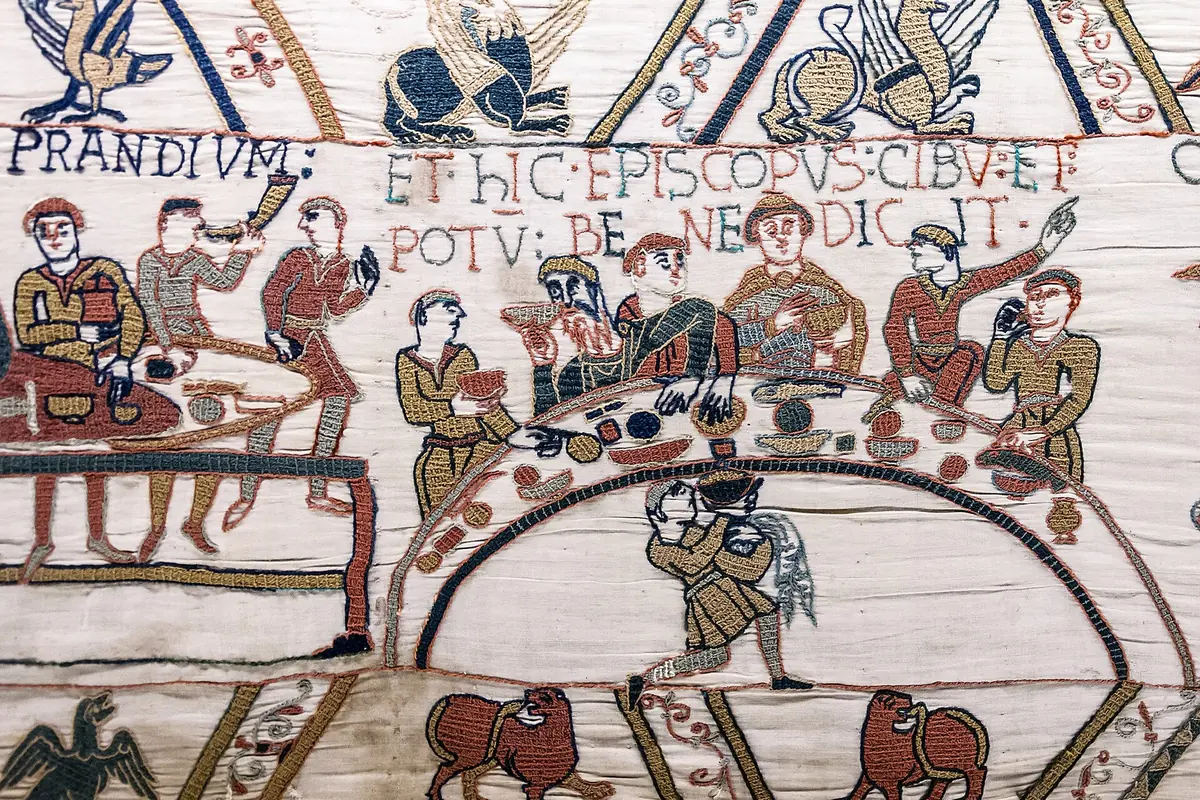
Wikipedia's entry on medieval cuisine describes shared plates and stew pots, from which guests helped themselves onto trenchers of stale bread, wood or pewter, using a spoon or their bare fingers. Knives did appear on the table, but each guest was expected to carry a personal one, and only a highly favoured guest was handed his own. The wealthy also washed their hands in shallow basins before the meal and between courses, because cleanliness was emphasised. Seen that way, a damp wipe at a show dinner is a small nod to an old custom.
The fork arrives late
Wikipedia's entry on the fork traces the table fork across the Italian peninsula, where it spread from the 11th century, was an ordinary sight by the 14th and had become almost universal among merchants and the upper classes by 1600. Its use was first described in English by Thomas Coryat, in a volume on his Italian travels from 1611, and for many years it was seen as an unmanly Italian affectation. It was not until the 18th century that the fork became commonly used in Great Britain. A dinner eaten by hand is therefore less of a gimmick than it first sounds.
What the show dinner is like
Wikipedia says both the original show and its successor served the same style of meal, without utensils, and that diners are expected to use their hands. It adds that a server can bring utensils if you ask, and that a large wet wipe is handed out to clean up. The listing confirms the hands-on style. How tidy the evening is will depend on you, on how close you sit to the arena and on how seriously you take the joke.
Practical advice
Wear clothes that can take a mark, and avoid anything with delicate sleeves. Keep your phone away from sticky fingers or put it in a pocket. If you would like a utensil, Wikipedia says you can ask your server for one, although the format expects fingers. Anyone with a dietary need should read the option page and the confirmation, because no menu is set out on the listing, and should not assume a particular dish. Bring a small pack of tissues if you like, but expect the wipe provided to do most of the work.
Who may prefer another night
If eating with your fingers in a noisy room would spoil your evening, this format will not suit you. The water show compared in another guide on this site is a seated, quieter alternative, and a conventional restaurant meal before or after any show is easy to arrange. Parents of very young children may also want to read the option page for any seating rules before they decide how messy a night they are ready for.
Frequently asked questions
Will I be given a fork?
Wikipedia says diners are usually not given utensils but can ask a server for them.
Is there a wipe?
Wikipedia says a large wet wipe is handed out.
What is on the menu?
The listing does not set one out, so none is promised here.
Why no cutlery?
The meal is medieval in style, and medieval diners used spoons or bare hands, according to Wikipedia.
When did forks become normal?
Wikipedia says Italy treated the fork as ordinary by the 14th century, while Great Britain waited until the 18th.
Sources