The legend
The Arthurian legend behind the show
Where King Arthur, Excalibur, Merlin and the Round Table come from, and why a stage show can tell the story in its own way.
Reserve your seat ↗Quick answer
King Arthur is a legendary king of Britain, and Wikipedia says most historians who study the period do not consider him a historical figure. The legend took shape in medieval literature, above all in Geoffrey of Monmouth's 12th-century Historia Regum Britanniae, and there is no one canonical version. That is why a Las Vegas show can retell it freely.
A king from stories
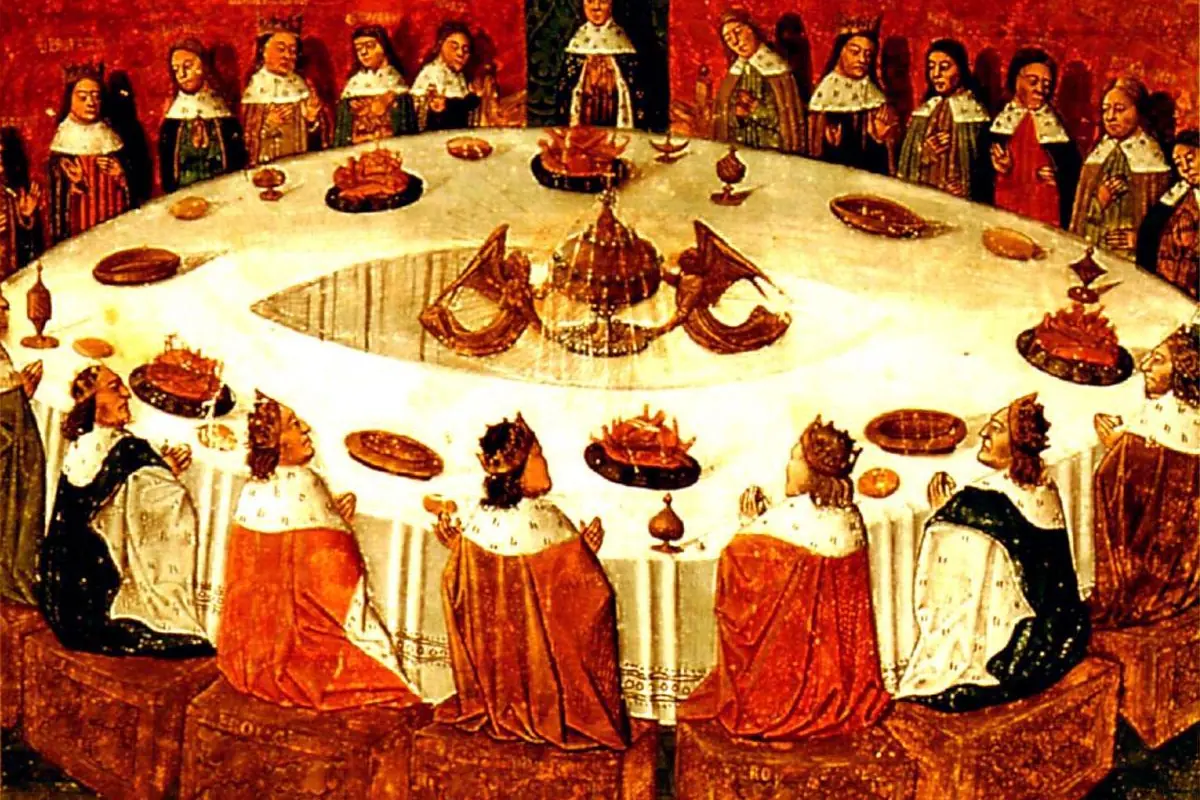
Wikipedia describes Arthur as a legendary king of Britain, a folk hero and a central figure in the Matter of Britain, the body of medieval literature about Britain and Brittany. He appears in early Welsh and Latin sources, but they were written some three hundred years after he is supposed to have lived. His fame as a figure of international interest grew largely through Geoffrey of Monmouth's Historia Regum Britanniae, a 12th-century work that Wikipedia calls fanciful and imaginative.
What Geoffrey added
Many elements now part of the story appear in Geoffrey's Historia: Arthur's father Uther Pendragon, the magician Merlin, Arthur's wife Guinevere, the sword Excalibur, Arthur's conception at Tintagel, his last battle against Mordred at Camlann and his final rest in Avalon. Later French writers, Wikipedia says, added Lancelot and the Holy Grail and began the tradition of Arthurian romance, in which the focus often shifts from the king to his knights.
The sword
Excalibur is the mythical sword of King Arthur, said to carry supernatural powers and to be tied to the rightful sovereignty of Britain. Its first reliably datable appearance is in Geoffrey's chronicle, where the name is Latinised as Caliburnus, and Wikipedia says the name possibly derives from the Welsh Caledfwlch. The sword in the stone is a separate tradition that enters through Robert de Boron's Merlin, and the two swords share a name only in later versions such as Thomas Malory's.
The table
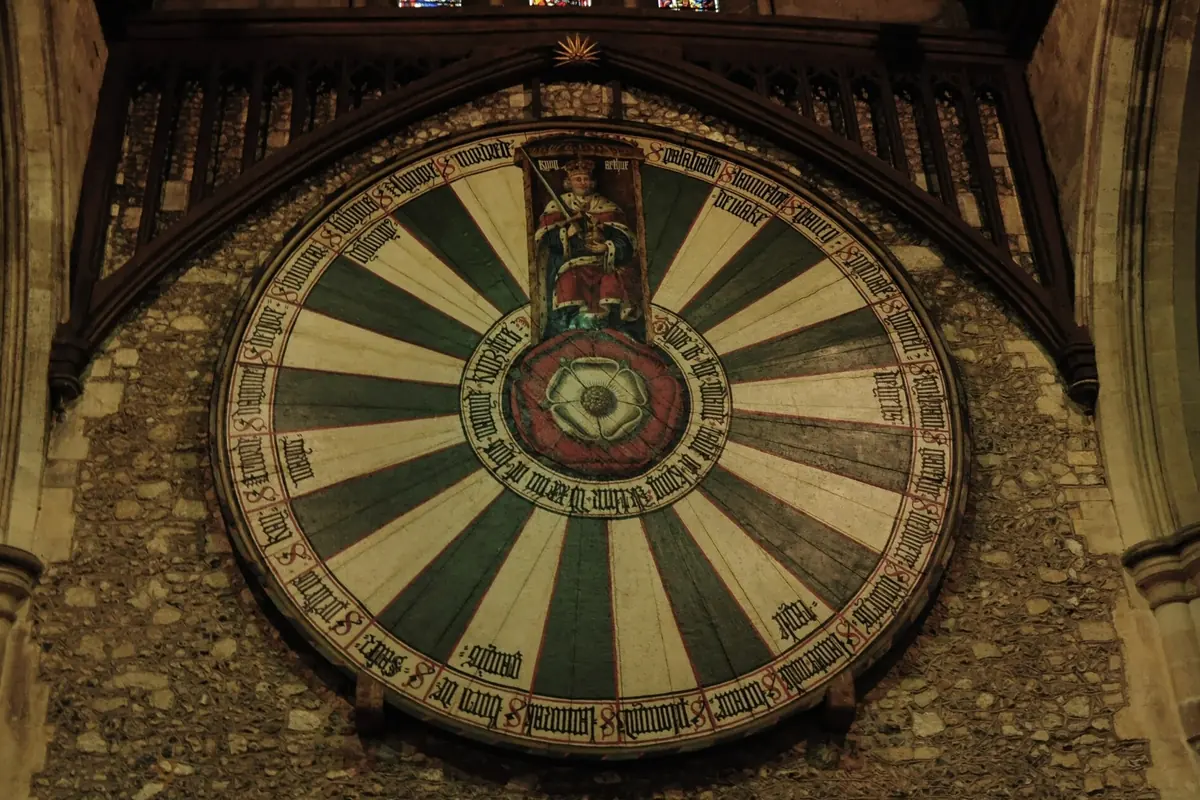
Wikipedia says the Round Table has no head, so everyone seated at it has equal status, and that it was first described in 1155 by Wace. A large tabletop hanging in Winchester Castle bears the names of knights of Arthur's court and was probably made for a Round Table tournament. It is 5.5 metres across, its timbers date to 1250 to 1280 by dendrochronology, and its present paintwork was ordered by Henry VIII.
Camelot
Camelot, the castle and court of the stories, is absent from the earliest Arthurian material. Wikipedia says it first appears in 12th-century French romances and that most scholars regard it as entirely fictional, its unspecified geography being ideal for chivalric writers. Arguments about a real Camelot have continued since the 15th century. A stage version can place the court wherever the show needs it, which is exactly what the legend has always allowed.
One of three great story cycles
The Matter of Britain was one of three great Western story cycles recalled repeatedly in medieval literature, Wikipedia says, alongside the Matter of France, about Charlemagne and his companions, and the Matter of Rome, drawn from classical mythology and history. Its pseudo-chronicles and chivalric romances flourished between the 12th and 16th centuries, and Arthur is its chief subject.
What this means for the show
No single text is the true version, so a dinner show is free to choose its own cast and plot. Wikipedia says the show's story has changed over the years, that its earlier form followed a young Arthur and that the current one centres on an adult king at the head of the Round Table. A holiday version runs in the season. This guide therefore treats the legend as background and leaves the plot to your booking page.
Frequently asked questions
Was Arthur a real king?
Wikipedia says most historians who study the period do not consider him a historical figure.
Is there one accepted version?
No. Wikipedia says the legend varies widely from text to text and has no canonical version.
Where is the real Round Table?
A medieval tabletop called the Winchester Round Table hangs in Winchester Castle, according to Wikipedia.
Where does Excalibur first appear?
Its first reliably datable appearance is in Geoffrey of Monmouth's chronicle, Wikipedia says.
Is Camelot a real place?
Most scholars regard it as entirely fictional, according to Wikipedia.
Sources