The contest
How a medieval joust worked
From mock battles to a lance duel: what a tournament was, how jousting became a sport, why it faded and where theatrical jousting has come back.
Reserve your seat ↗Quick answer
A joust was a martial game between two riders with lances, one part of the wider medieval tournament. Wikipedia says it grew out of heavy cavalry tactics, became a specialised sport in the Late Middle Ages, faded in the 16th and 17th centuries and has seen a limited theatrical revival since the 1970s.
Tournament and joust are not the same thing
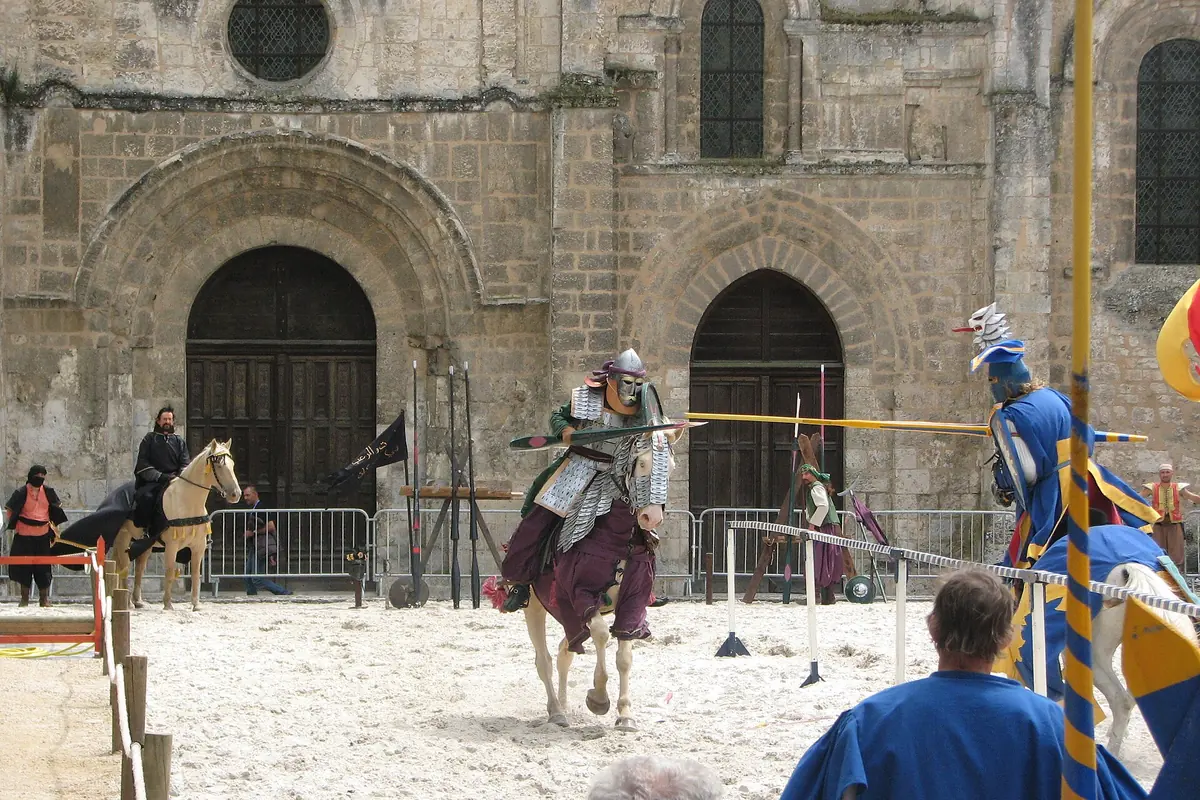
Wikipedia defines a tournament as a chivalrous competition or mock fight, widespread between the 12th and 16th centuries. It included mêlée, hand-to-hand combat and contests of strength or accuracy, and only sometimes jousts. Tournaments marked coronations, marriages and births, or welcomed important guests, and some were simply entertainment. Some contemporaries thought them frivolous, and even a threat to public order, but the shows were popular.
The joust itself
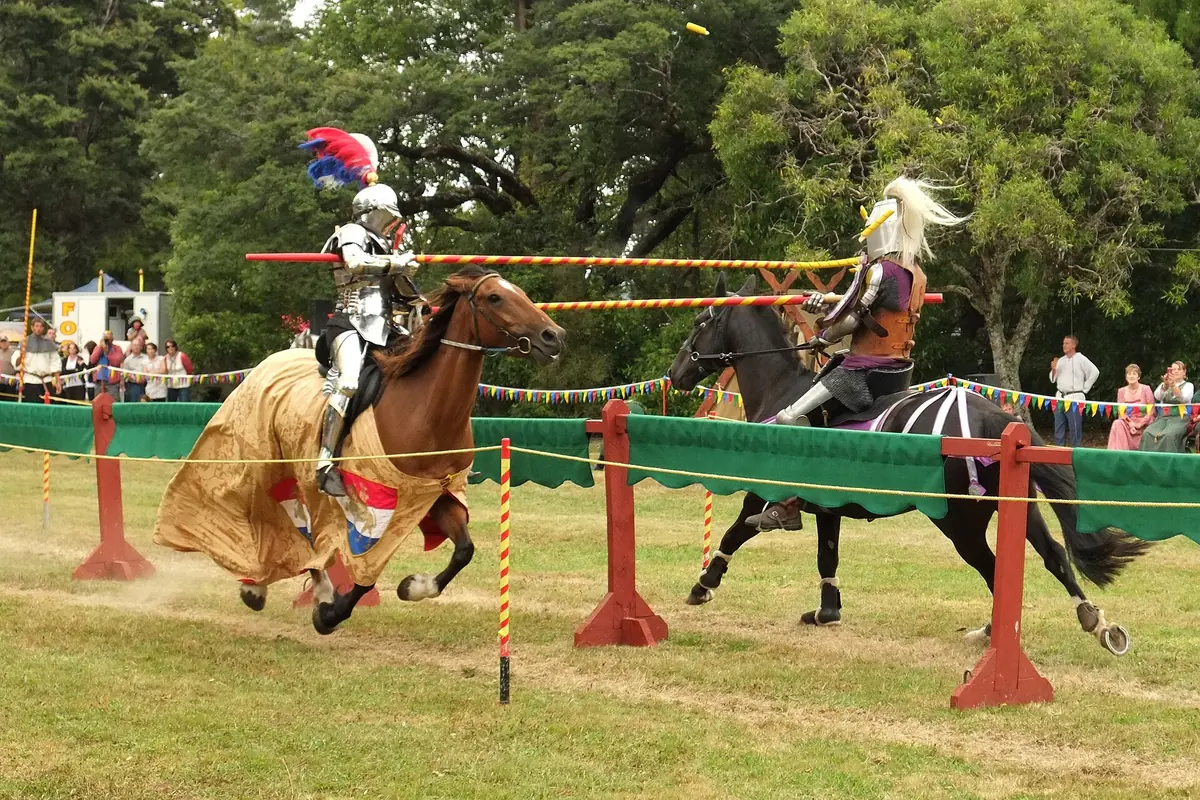
Wikipedia calls jousting a martial game between two combatants on horse or on foot. It descends from the Old French joster, which ultimately comes from the Latin iuxtare, to approach or meet. Jousting on horse is based on the military use of the lance by heavy cavalry, and in the Late Middle Ages, as the ideals of chivalry spread, it became more regulated and turned into a sport in its own right, with honour to be won by fighting fairly. The Chronicles of Froissart, written in the 1390s, record that combat was by then expected to be non-lethal and was divided into rounds of three encounters with various weapons, of which the joust was one. Wikipedia adds that this romanticised chivalric revival drew on the chivalric romances, which nobles tried to re-enact in real life, sometimes blurring reality and fiction.
The armour
From the 11th to the 14th centuries, while jousting was still tied to the lance in warfare, armour evolved from mail, with a solid helmet and a shield, to plate. By 1400, Wikipedia says, knights wore full suits of plate armour, called a harness. The look is what a show borrows first: the helm, the shield and the lance are the visual shorthand for a knight, even when the contest on the sand is staged.
Why it stopped
Wikipedia says jousting stayed popular with nobles across Europe through the 16th century. In France it stopped after an accident killed King Henry II in 1559. In England it survived in the Accession Day tilts of Elizabeth I and James VI and I. By the 17th century it had given way to other equestrian sports, though non-contact skill-at-arms disciplines survived in a lighter form.
The revival
Theatrical jousting re-enactment has returned in a limited way since the 1970s, and competitive jousting since the 1990s, according to Wikipedia. Fairs and heritage events stage it today, and so does a Las Vegas dinner show, which adds pyrotechnics and a meal to the older contest and sets it in a purpose-built arena rather than a tilting ground. Wikipedia calls the revival limited, so staged versions at fairs and in shows are the exception, not the norm.
What to expect from a show version
A show borrows the look of the joust, with riders, lances and shields, and wraps it in a story. The listing says knights compete in horse racing, jousting and sword fighting, with special effects. This guide cannot describe a given night's running order, and it does not need to: the point is that the contest has a long history behind it, and that you are watching a theatrical descendant, not a tournament. It is also an easy frame for children: the helm, the shield and the lance are simple to point out from your seat.
Frequently asked questions
Where does the word joust come from?
Wikipedia says it comes from Old French joster, from the Latin iuxtare, to approach or meet.
Did jousting end?
It faded from the 16th and 17th centuries, and Wikipedia reports a theatrical revival since the 1970s.
Was a tournament just jousting?
No. It also included mêlée and hand-to-hand combat, Wikipedia says.
Why did France stop jousting?
Wikipedia says an accident that killed King Henry II in 1559 ended it there.
Is the show a real tournament?
No. It is theatre that borrows the tournament's look, with special effects and a meal.
Sources